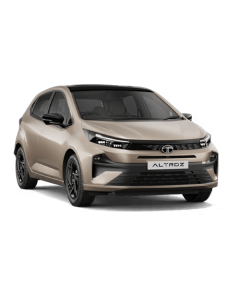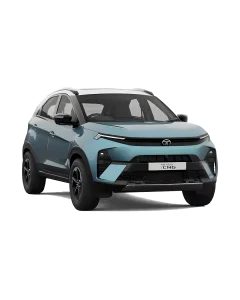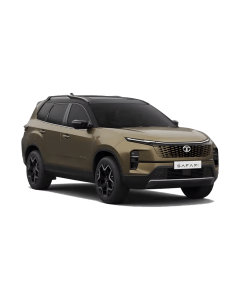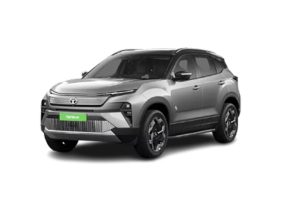
The Harrier EV takes the dominating, alpha road presence of the standard Harrier and injects it with a massive battery and dual-motor all-wheel drive. It promises the heavy, tank-like cruising ability of a premium SUV with the instant, silent torque of a modern EV. If you want a zero-emissions highway tourer that refuses to look like a boring eco-car, this is your flagship.
Tata Harrier Ev price starts at ₹ 21.49 Lakh and goes upto ₹ 30.23 Lakh (Avg. Ex-Showroom, Delhi). It is offered in 18 variants. The base model is Tata Harrier Ev Adventure 65 Rwd and the top model is Tata Harrier Ev Empowered Qwd 75 Stealth Acfc.


Skip the base Adventure 65 RWD if you suffer from range anxiety and plan on doing cross-country road trips. The Fearless+ 75 QWD ACFC is the sweet spot, giving you the larger battery, all-wheel drive for superior grip, and Level-2 ADAS. Stretch to the Empowered QWD 75 Stealth ACFC only if you want the in luxury, featuring ventilated seats, JBL audio, and the menacing dark aesthetic.
Swipe to compare specs side-by-side.


Early reviews praise the silent cabin; removing the diesel engine completely transforms the Harrier into a luxury-class cruiser. The instant torque makes highway overtaking laughably easy. However, drivers quickly note that the sheer weight of the vehicle is very noticeable under hard braking, and the anxiety of finding a fast charger for a battery this large on highway runs is very real.
Expect premiums to reflect standard premium EV segment rates, which are high due to the massive battery pack.
It features a dual-motor All-Wheel Drive (AWD) system, making it highly capable on slippery surfaces and mild off-road trails.
As a flagship launch, expect initial wait times to stretch anywhere from 8 to 12 weeks.
The larger 75 kWh battery should realistically deliver around 400-450 km on a full charge depending on highway speeds.
Yes, it is built on a heavily modified Omega-Arc platform, making it incredibly robust and secure at high speeds.
Yes, it features Vehicle-to-Load (V2L) technology, turning the massive battery into a rolling power bank.
Premium EVs generally see steeper initial depreciation than diesel equivalents; expect to retain around 50%.
You will only regret it if you frequently drive 800km in a single day without planning your charging stops.
Routine maintenance is significantly lower than its diesel counterpart, as EVs require very few mechanical replacements.
Yes, Tata's focus on heavy sheet metal and structural rigidity means it feels noticeably more planted and secure at highway speeds.
Yes, if you skip the mid-to-high trims, you will miss out on the crucial touchscreen and tech features that make the cabin feel modern.