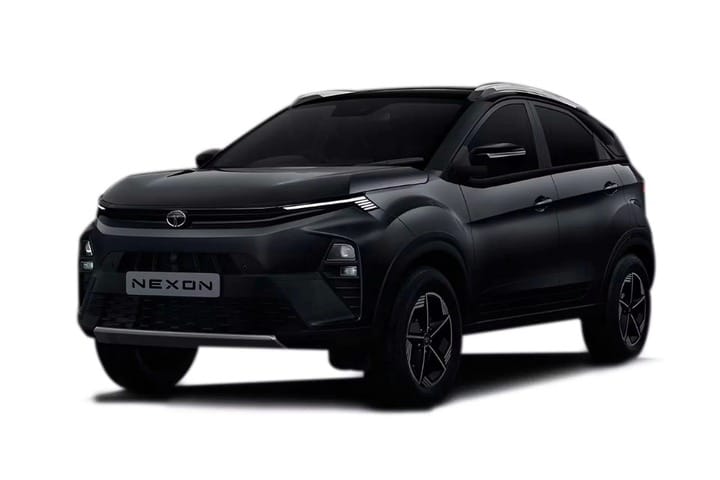
Tata Motors: The Great Indian Turnaround There was a time, not too long ago, when buying a Tata car meant you were either buying a taxi or a rugged utility vehicle. Today, Tata Motors is the most fascinating success story in the Indian automotive industry. They have completely shed their commercial-vehicle baggage to become the definitive benchmark for passenger safety, striking design, and electric mobility. If you want a car that feels like a vault on wheels, you buy a Tata.
A Brief History: From the Indica to the Nexon Tata’s journey in the passenger car market is a story of bold experiments. In 1991, they gave India its first homegrown SUV, the iconic Tata Sierra. In 1998, they launched the Indica, India’s first fully indigenous passenger car, which became a legend for its interior space. While ambitious projects like the Nano struggled to find their footing, everything changed around 2017 with the arrival of the Nexon. Tata made a massive pivot: they stopped competing purely on price and started competing on safety. The Nexon became the first Indian car to score a 5-star Global NCAP rating, fundamentally changing what Indian families expected from their vehicles.
The Latest Tech: Engineering for India Today, Tata isn’t just catching up to global giants; in many ways, they are leading them. Their modern lineup is packed with highly localized, cutting-edge technology designed specifically for Indian problems:
-
The Born-Electric Acti.ev Platform: Tata commands the Indian EV market, and their new Acti.ev architecture (underpinning the Punch EV and Curvv EV) is a masterclass. It features a flat floor for maximum cabin space, frunks (front trunks), and Vehicle-to-Load (V2L) tech, which literally lets you power your laptop or camping gear directly from the car’s battery.
-
Twin-Cylinder iCNG: For years, buying a CNG car meant sacrificing your entire boot to a massive green cylinder. Tata fixed this by splitting the tank into two smaller cylinders hidden beneath the floorboard, giving families their luggage space back while retaining massive fuel savings.
-
DCA Transmission: Standard dual-clutch automatics overheat and jerk in brutal Indian traffic jams. Tata engineered their DCA with a planetary gear system specifically designed to handle extreme heat and stop-and-go gridlock smoothly.
-
Land Rover DNA: Flagship SUVs like the Harrier and Safari are built on the OMEGA-Arc platform, which is directly derived from Land Rover’s D8 architecture. This gives them an unmatched, heavy, premium cruising ability on the highway.
The Honest Verdict: Should You Buy One? Tata cars are built for buyers who prioritize structural integrity and ride comfort above all else. Their suspensions are purely magical—they swallow broken rural roads and deep city potholes without transferring the shock into the cabin.
However, no brand is perfect, and Tata’s trade-offs are well documented. Their naturally aspirated 1.2L 3-cylinder engines (found in the Tiago, Tigor, and Punch) vibrate noticeably at idle and lack the buttery refinement of Hyundai or Maruti engines. Furthermore, because Tata packs their cars with so much heavy software and massive digital screens, early owners often report minor UI glitches, and the after-sales service experience heavily depends on the specific dealership you visit.
But if you want a striking, incredibly robust vehicle that protects your family with top-tier crash ratings while shrugging off the absolute worst roads India has to offer, Tata currently has no equal.