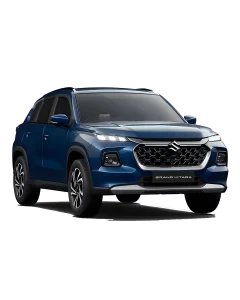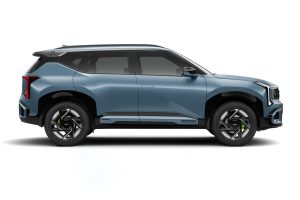
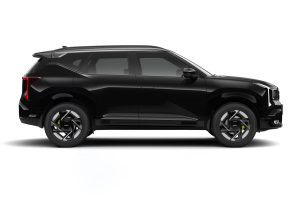
Kia focuses heavily on interior tech and aggressive styling over pure driving comfort. The Kia Seltos is the balanced, premium choice for buyers who want a cabin overflowing with technology that makes daily driving effortless. It trades the soft, plush ride of its cousin, the Hyundai Creta, for a stiffer suspension and sharper handling dynamics. If you want a mid-size SUV that feels incredibly modern, drives like a sports crossover, and commands attention, this is the benchmark.
Kia Seltos price starts at ₹ 10.99 Lakh and goes upto ₹ 19.99 Lakh (Avg. Ex-Showroom, Delhi). It is offered in 40 variants. The base model is Kia Seltos Hte G1.5 Smartstream and the top model is Kia Seltos X Line (a) 1.5l Crdi Diesel At.


Skip the base HTE G1.5 Smartstream variant as it feels far too bare-bones and misses out on the crucial tech features that define this car. The HTK (O) 1.5l CRDi Diesel AT makes far more sense if you want essential tech and safety without inflating your EMI. Stretch to the X-Line (A) 1.5l CRDi Diesel AT only if you genuinely demand the flagship experience with premium luxury touches.
Swipe to compare specs side-by-side.
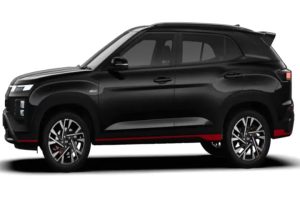

Owners heavily praise the sheer road presence and aggressive acceleration of the turbo engines, noting it feels wildly fun on the highway. However, urban drivers frequently complain that the stiff suspension translates every single pothole into the cabin, making daily commutes slightly fatiguing.
While the current iteration includes standard 6 airbags and ADAS, its structural crash ratings have historically trailed behind the heavier Tata Harrier.
Yes, if you skip the HTX or GT trims, you will miss out on the panoramic sunroof and dual screens that define the Seltos experience.
Routine servicing aligns with standard mid-size SUV rates, making it reasonably affordable.
Demand remains strong; expect wait times ranging from 3 to 6 weeks.
The turbo-petrol returns 10-12 kmpl in city traffic, while the diesel is much more efficient at 14-17 kmpl.
It holds its value exceptionally well, heavily driven by strong secondary market demand for tech-loaded SUVs.
It is perfectly sized for urban environments, with light steering that makes tight parking manageable.
No, it is tuned for sporty handling, meaning you will feel sharp bumps far more than you would in a Hyundai Creta.
Expect premiums to align with standard premium mid-size SUV segment rates.
Yes, Kia consistently over-delivers on cabin technology, offering conveniences like ventilated seats and large crisp screens at lower price points than most competitors.
Most are highly practical. Features like ventilated seats, 360-degree cameras, and blind-spot monitors genuinely make daily driving and parking noticeably easier.
While the interior fit and finish feel highly premium, the underlying sheet metal and crash ratings generally feel lighter compared to robust native rivals like Tata.